STEM at home
Numberblocks
Ages: 3-6 years
It is a story of friends who can always count on each other, and also a sequenced math curriculum. Numberblocks is an animated series where stacked-block characters join, split, and rearrange to show how numbers work, covering number recognition, counting, addition, subtraction, multiplication, and division across 90 episodes in five levels. Developed with the UK National Centre for Excellence in the Teaching of Mathematics, the progression is real. The companion website organizes episodes by level and adds printable activities. US families can watch on YouTube or Netflix. A paid app adds offline access and quizzes.
Awards: BAFTA, Children's Preschool Animation (2019); DfE recommended for home learning.
Why we like it: Most early math content teaches children to count. This one teaches them to see how numbers are built. A parent in the room asking questions is the difference between a good show and a real math lesson.

Ask a Scientist: Superhuman Science Series
Ages: 10+ years
Short videos featuring named working scientists, including bioengineers, oncologists, and computational researchers, explaining their actual work in plain language. Topics span mRNA vaccine technology, gene therapy, bionic limbs, precision medicine, synthetic biology, and AI-assisted disease diagnosis. Each clip centers on a credentialed researcher, making the science feel like something real people pursue rather than a subject kids study in school. The companion educator guide on the same site is NGSS-aligned and includes hands-on family activities worth downloading alongside these videos.
Why we like it: These videos do something specific: they put a face and a research story on fields kids often encounter only as vocabulary words. Watching a biomedical engineer explain how a prosthetic limb restores sensation builds science identity in a way no worksheet can. A strong fit for curious older kids starting to ask who does this work and why.
Bill Nye the Science Guy
Ages: 8-12 years
The original Bill Nye the Science Guy ran 100 episodes in the 1990s and remains one of the most curriculum-aligned science series made for kids. Each 25-minute episode covers one topic — buoyancy, chemical reactions, genetics, plate tectonics — through demonstrations and field visits, plus a recurring segment where working professionals connect the subject to their actual jobs. A companion library of home demos at billnye.com extends the science off-screen, covering experiments in air pressure, static electricity, and light refraction. Available on major digital platforms; home demos are free. Some technology episodes show their age.
Awards: 19 Emmy Awards, including Outstanding Performer in Children's Programming (Daytime Emmy Awards)
Why we like it: The recurring scientist segment builds the habit of connecting concepts to real practitioners. Pairing episodes with the home demos converts passive viewing into repeatable experimentation, which is where the science actually sticks.
Mark Rober YouTube Channel
Ages: 8+ years
Mark Rober spent nearly a decade as a NASA engineer on projects including the Mars Curiosity rover, and his videos are built the way engineering actually works: identify a problem, try something, watch it fail, figure out why, and go again. Physics, mechanical engineering, biology, and applied mathematics all show up here, tied to a real experiment. Kids who have never warmed to science often connect with this channel because the problems are specific and Rober is clearly invested in solving them.
One thing to know: your child will be watching, not doing. And several videos weave in promotion for a paid subscription kit line in ways that are not always easy for kids to distinguish from the content itself.
Why we like it: Rober models engineering persistence without ever naming it. Kids see someone genuinely stuck, genuinely working through it, and genuinely pleased when something finally works. That picture of how problem-solving actually feels is harder to find than it should be.
3M Young Scientist Lab: Science at Home
Ages: 8-14 years
Science at Home is a free video series produced by 3M scientists and special guests, built around a straightforward premise: real science happens with whatever is in front of you. Each short experiment uses common household materials, from spaghetti and marshmallows, milk and dish soap, baking soda and vinegar, to explore concepts like structural engineering, chemical reactions, surface tension, the Bernoulli principle, and kinetic energy. The experiments are taught on camera by working scientists, which means kids aren't just watching a trick. They're watching someone who actually does this work explain why it happens.
Why we like it: Each experiment is anchored to a specific scientific concept, and the scientists explain the underlying reasoning, not just the steps. That's the difference between a demo and a learning moment. Kids build real scientific vocabulary while testing cause and effect with materials already in your kitchen.
Numberphile
Ages: 13+ years
Numberphile is a YouTube channel and podcast built on a slightly subversive idea: numbers are fascinating, and mathematicians are some of the most interesting people to listen to. Produced by video journalist Brady Haran, the videos pull in mathematicians from around the world to dig into prime numbers, infinity, famous proofs, puzzles, and the occasional bizarre calculation that takes an hour to unpack. The companion podcast slows down and lets those same guests talk about how they actually think, work, and got hooked on math in the first place. It isn't a curriculum. It's a window into how mathematicians see the world.
Why we like it: Most math content for kids stays inside the textbook. Numberphile does the opposite. It treats math as an open, ongoing human conversation. Your child sees real mathematicians puzzled, excited, and occasionally stuck, which quietly teaches the thing that matters most: math isn't about being fast. It's about being curious enough to keep going.
Emily's Science Lab
by Emily Calandrelli
Ages: 5-12 years
Emily's Science Lab is the ongoing YouTube home of Emily Calandrelli, the MIT-trained engineer known as "The Space Gal." New videos arrive regularly — hands-on chemistry, physics, and engineering experiments explained in plain language, using materials most families already have in the kitchen or garage. Emily shows her work: she names the concept, runs the experiment, walks through safety, and explains what just happened and why.
If your child first met Emily through her Netflix series, Emily's Wonder Lab, this is where the same spirit keeps going — without a finale.
Why we like it: It's a living resource rather than a finite series. Free, family-friendly, and built around household materials rather than kits, it's the kind of thing you can pull up on a rainy Saturday without a trip to the store — and the library keeps growing.
Sci Show Kids
Ages: 6-8 years
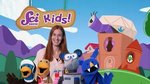
SciShow Kids follows host Jessi, her robot rat Squeaks, and their friends at the Fort as they tackle the kinds of questions kids actually ask — and adults often can't answer on the spot. Why do we hiccup? How do volcanoes work? What's inside a black hole? Every episode is short, lively, and genuinely satisfying.
Why we like it: It meets kids at their actual curiosity, not a curriculum's version of it.
It's Not Magic It's Science
by Jay Flores
Ages: 5+ years
Your kid has seen a magic trick and lost their mind over it. Jay Flores figured out how to bottle that exact feeling — and turn it into a science lesson.
It's Not Magic, It's Science is a video series built around a simple but brilliant idea: use the wonder of magic to open the door to real scientific thinking. Every experiment follows three steps — Experiment, Explanation, Exploration — so kids don't just see something cool happen. They understand why, then go further.
Why we like it: The structure teaches kids to ask the next question — which is the whole point of science.