STEM at home

Numberblocks
Ages: 3-6 years
It is a story of friends who can always count on each other, and also a sequenced math curriculum. Numberblocks is an animated series where stacked-block characters join, split, and rearrange to show how numbers work, covering number recognition, counting, addition, subtraction, multiplication, and division across 90 episodes in five levels. Developed with the UK National Centre for Excellence in the Teaching of Mathematics, the progression is real. The companion website organizes episodes by level and adds printable activities. US families can watch on YouTube or Netflix. A paid app adds offline access and quizzes.
Awards: BAFTA, Children's Preschool Animation (2019); DfE recommended for home learning.
Why we like it: Most early math content teaches children to count. This one teaches them to see how numbers are built. A parent in the room asking questions is the difference between a good show and a real math lesson.

Earth Odyssey with Dylan Dreyer
by NBC
Ages: 7+ years
Each episode of Earth Odyssey takes your family to a different corner of the planet: African savannas, Indonesian islands, the rivers of France, spending a half hour with the wildlife, ecosystems, and conservation of that place. The host is Dylan Dreyer, a TODAY Show meteorologist, which means the science is handled by someone who thinks about natural systems for a living. Content covers animal adaptation, food chains, symbiosis, biodiversity, and habitat across eight seasons of original episodes. It airs Saturday mornings on NBC at no cost and streams on Peacock and Prime Video.
Awards: Five national Telly Awards
Why we like it: This is a reliable way to build ecological literacy, the specific vocabulary of how living systems depend on each other. Kids who watch with a curious question in mind (why do animals in cold climates look the way they do?) come away with real content to work with, not just entertainment. Best used as a conversation starter, not a destination.
Bill Nye the Science Guy
Ages: 8-12 years
The original Bill Nye the Science Guy ran 100 episodes in the 1990s and remains one of the most curriculum-aligned science series made for kids. Each 25-minute episode covers one topic — buoyancy, chemical reactions, genetics, plate tectonics — through demonstrations and field visits, plus a recurring segment where working professionals connect the subject to their actual jobs. A companion library of home demos at billnye.com extends the science off-screen, covering experiments in air pressure, static electricity, and light refraction. Available on major digital platforms; home demos are free. Some technology episodes show their age.
Awards: 19 Emmy Awards, including Outstanding Performer in Children's Programming (Daytime Emmy Awards)
Why we like it: The recurring scientist segment builds the habit of connecting concepts to real practitioners. Pairing episodes with the home demos converts passive viewing into repeatable experimentation, which is where the science actually sticks.
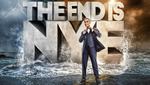
The End Is Nye
Ages: 10+ years
Each episode of this six-part Peacock series tackles one planetary threat: solar flares, supervolcano eruptions, global flooding, cybersecurity attacks, and more. Produced alongside the Cosmos team, the show places a science communicator inside a simulated disaster to work through the mechanics of each catastrophe and what Earth systems science tells us about preventing it. The content covers real geophysical phenomena, explained with specificity. Common Sense Media rates it age 10+, and that matters here. Disaster sequences are intense, with actor portrayals of people in mortal peril. Not for younger children; sensitive kids warrant a preview.
Why we like it: The structure is what makes it useful. Each episode moves from catastrophe mechanics to root causes to scientific interventions, asking the viewer to follow a chain of causation. Tracing from physical event to human consequence to scientific response is exactly the reasoning habit that transfers across subjects.
Emily's Wonder Lab
by Emily Calandrelli
Ages: 5-10 years
Emily's Wonder Lab is a ten-episode Netflix series hosted by Emily Calandrelli — MIT engineer, former NASA researcher, and the kind of science teacher every kid wishes they'd had. Each fifteen-minute episode takes on one big concept: non-Newtonian fluids, fluorescence, chemical reactions, physics in motion. Emily runs a larger-than-life demonstration, then walks viewers through a hands-on experiment they can try at home with everyday materials. The kid scientists make wrong guesses on camera. That's not a bug — it's the point.
If your child wants more when the series ends, Emily's Science Lab on YouTube continues the same approach with new experiments.
Awards: Emmy-nominated host; one of Netflix's standout STEM shows for families.
Why we like it: It models the scientific method without ever naming it — hypothesis, test, revise, repeat. Real science, no talking down. The kind of show that ends with your child asking if you have cornstarch in the pantry.
Xploration Nature Knows Best
by Danni Washington
Ages: 13-16 years
Xploration Nature Knows Best takes a simple, powerful idea — that nature has already solved most of the engineering problems we're still working on — and builds a whole show around it. Host Danni Washington, a marine biologist and youth science advocate, travels the country meeting the scientists, engineers, and innovators using biomimicry to shape the future: gecko-inspired adhesives, shark-skin swimsuits, wind turbines modeled on whale fins. Episodes are short, visually rich, and genuinely surprising. The science is real, the pace is right, and the throughline — that careful observation of the natural world is its own form of STEM thinking — lands without ever being preachy.
Why we like it: It quietly reframes what counts as STEM. Biology, engineering, and design sit side by side, and curiosity about the world outside the window becomes the starting point for everything else. Washington is warm, credible, and clearly delighted by what she's showing — which tends to be contagious.
Xploration Outer Space
by Emily Calandrelli
Ages: 6+ years
Xploration Outer Space follows MIT-trained engineer Emily Calandrelli as she travels to NASA centers, private space companies, and research universities to show what the space industry actually looks like up close. One episode is a ride on the zero-gravity Vomit Comet. Another visits the Mars Desert Research Station. Another asks whether there's life beyond Earth — and takes the question seriously. The show covers astronautics, physics, and planetary science without assuming a math or science background. You just need to be curious. Streams on Amazon Prime and airs Saturdays on FOX.
Awards: Three-time Daytime Emmy nominee
Why we like it: It makes space exploration feel accessible without watering it down, and Calandrelli — the first woman in the U.S. to solo-host a national science show — treats curiosity itself as the prerequisite.
Xploration DIY Sci
by Steve Spangler
Ages: 6-12 years
Xploration DIY Sci is a weekly television series hosted by science educator Steve Spangler that turns ordinary household items into the stuff of real science. Each episode zeroes in on a single concept — air pressure, inertia, fluid dynamics, chemical reactions — and walks through jaw-dropping demonstrations your child can recreate on the kitchen counter. Six seasons deep, there's plenty to explore. These aren't tricks to watch passively. They're invitations to try, observe, predict, and figure out why something happened. Part of the Xploration Station STEM block on Fox affiliates, streaming on Amazon Prime, Pluto TV, Tubi, and Roku.
Awards: Emmy-nominated. Parents' Choice Foundation recognized.
Why we like it: The best STEM resources don't stop at the screen — they send your child straight to the junk drawer looking for baking soda and a plastic bottle. Every episode hands you a reason to put the remote down and make something happen.
The Magic School Bus
Ages: 4-8 years
Ms. Frizzle and her impossibly game class have been taking field trips inside the human body, through the solar system, and to the ocean floor since 1994 — and the science still holds up. The Magic School Bus makes complex concepts feel like pure adventure, which is exactly how it should feel at this age.
Why we like it: It's a classic for a reason. The curiosity it sparks is the real curriculum.
The Magic School Bus Rides Again
Ages: 6-10 years
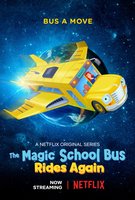
The bus is back — and it got an upgrade. Ms. Frizzle's younger sister takes the wheel in this Netflix reboot, and while the spirit is the same (big questions, wilder field trips, science that actually sticks), the adventures now span time periods and locations the original never touched.
Why we like it: It introduces the next generation to the bus without just replaying the original. New kids, same magic.