STEM at home
Superhuman Body: World of Medical Marvels
Ages: 5+ years
This 40-minute giant-screen documentary takes you inside the human body and the labs of scientists working to repair it. Narrated by Academy Award winner Matthew McConaughey, it follows real people transformed by bioengineering: a teenager whose leukemia was eliminated through CAR T-cell therapy, an engineer who lost both legs and now designs bionic limbs, a roboticist whose machines help children with disabilities. The filmmaking makes the science visceral. It plays at the New York Hall of Science in Queens; schools can arrange a field trip to NYSCI or request a streaming link.
Awards: Giant Screen Cinema Association Best Film for Lifelong Learning, 2025
Why we like it: The film treats science as a human process driven by curiosity, setbacks, and persistence. Watching researchers explain their thinking builds the model-making habit we want kids to carry into any STEM context. Activity guides on osmosis, cellular respiration, and cardiac modeling are free on the film's site.
Bill Nye: Science Guy (2017)
Ages: 10+ years
This 2017 documentary follows a science communicator-turned-advocate as he takes on climate change denial, challenges to evolution, and the broader erosion of scientific thinking in public life. Produced with behind-the-scenes access, it captures him in his role as CEO of The Planetary Society, overseeing the launch of a solar sail spacecraft and debating critics in public forums. The film features appearances by Neil deGrasse Tyson and Ann Druyan. It premiered as a Documentary Spotlight at SXSW and screened at over two dozen festivals. Available on Netflix and for digital purchase. Bill Nye
Why we like it: Most STEM resources show kids how science works. This one shows them why it matters and what it costs to defend it. Watching a mechanical engineer navigate public skepticism about climate science and evolution builds something harder to teach: the understanding that science is not just a body of knowledge but a practice that requires persistence and clear reasoning under pressure.
Design & Thinking
Ages: 14+ years
This 74-minute documentary asks what it actually means to think like a designer. Through interviews with founders, engineers, business strategists, and social innovators, it shows how design thinking (approaching problems through empathy, iteration, and prototyping) reshapes how people and organizations make decisions. The founders of Stanford's d.school and IDEO are among those featured. Available for digital download through the filmmakers' site.
Awards: Selected for 8 international film festivals (2012), including Newport Beach Film Festival and Palo Alto International Film Festival. Named a must-see design documentary by Forbes.
Why we like it: Design thinking is one of the most transferable thinking frameworks a young person can encounter. This film makes the case for it concretely, showing the non-linear process behind ideas that work. For a teenager starting to wrestle with open-ended problems, watching real innovators talk through ambiguity and failure is genuinely useful.

Rule Breakers
by Angel Studios
Ages: 10+ years
Based on the true story of Afghanistan's first all-girls robotics team, this PG drama follows students building a competition robot from salvaged parts while navigating Taliban-controlled streets and visa denials. Before any official kit arrived, the team sourced scrap materials and taught themselves engineering basics, the kind of resourceful iteration that defines how engineers actually work. Co-written by one of the women portrayed, the film centers Afghan girls as brilliant and courageous, not as victims. The content is heavy: a mosque bombing and armed confrontations are depicted, and parents should preview before watching with sensitive children. Now streaming on Angel Studios; available to rent or buy on major VOD platforms.
Why we like it: It shows girls doing real engineering under impossible constraints, demonstrating how engineers actually think: identify the problem, use what you have, iterate, persist. Representation and authentic process in one film is rare.
Cities of the Future
by MacGillivray Freeman Films 2,201 posts
Ages: 6+ years
Most kids have seen a city. Few have ever been asked to imagine building one. Cities of the Future does exactly that — a 40-minute documentary following civil engineer Paul Lee as he shows what's already being built to meet a changing world. Electric flying cars, smart buildings, and solar energy beamed from space. The film travels from Los Angeles racing toward 100% renewable energy, to Amsterdam's 3D-printed steel bridge, to Singapore, where engineered Supertrees have turned a sweltering island into a sustainable oasis. Your child also meets middle schoolers in the Future City Competition, designing cities alongside real engineers. Best on an IMAX screen, but also streams on Vimeo.
Why we like it: It makes the invisible systems behind modern life — power, transit, water, buildings — suddenly visible, and frames engineering the way it actually works: define the problem, design, test, refine, repeat. Your child walks out looking at their own city differently.
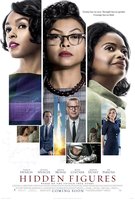
Hidden Figures
by 20th Century Fox
Ages: 8+ years
Hidden Figures tells the true story of Katherine Johnson, Dorothy Vaughan, and Mary Jackson — three Black women whose mathematical brilliance helped launch John Glenn into orbit and quietly changed the course of the Space Race. It's a story about what happens when talent refuses to be ignored.
Why we like it: It puts faces on STEM history that kids rarely see — and opens up real conversation about who gets credit and why.
Dream Big: Engineering Our World
by MacGillivray Freeman Films
Ages: 7+ years
Dream Big is an IMAX documentary that takes the question "how did they build that?" and turns it into something genuinely cinematic — from the Great Wall of China to underwater robots to cities designed to sustain themselves. Narrated by Jeff Bridges, it's the kind of film that makes your child look at the built world differently on the drive home.
Why we like it: Engineering becomes wonder. That shift — from "that's impressive" to "I want to understand how" — is exactly what we're after.
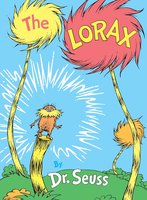
The Lorax
by Dr Seuss
Ages: 3+ years
A beloved fable about what happens when industrial progress goes unchecked — and what it takes to reverse it. At its heart, it's an environmental science story: ecosystems, deforestation, pollution, and the fragile chain of cause and effect that connects them. The picture book delivers it in Seuss's unmistakable rhyme; the animated film gives it color, music, and scale. Both are widely available and work beautifully together.
Awards: #1 New York Times Bestseller | Caldecott Honors | Pulitzer Prize
Why we like it: Few resources open up conversations about sustainability, ecosystems, and civic responsibility this naturally — or this early. The "UNLESS" at the end is one of the most quietly powerful calls to action in children's literature, and it lands just as hard on screen as it does on the page. Read it, watch it, talk about it.