STEM at home
Emily's Wonder Lab
by Emily Calandrelli
Ages: 5-10 years
Emily's Wonder Lab is a ten-episode Netflix series hosted by Emily Calandrelli — MIT engineer, former NASA researcher, and the kind of science teacher every kid wishes they'd had. Each fifteen-minute episode takes on one big concept: non-Newtonian fluids, fluorescence, chemical reactions, physics in motion. Emily runs a larger-than-life demonstration, then walks viewers through a hands-on experiment they can try at home with everyday materials. The kid scientists make wrong guesses on camera. That's not a bug — it's the point.
If your child wants more when the series ends, Emily's Science Lab on YouTube continues the same approach with new experiments.
Awards: Emmy-nominated host; one of Netflix's standout STEM shows for families.
Why we like it: It models the scientific method without ever naming it — hypothesis, test, revise, repeat. Real science, no talking down. The kind of show that ends with your child asking if you have cornstarch in the pantry.
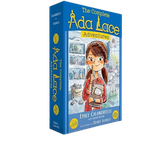
The Complete Ada Lace Adventures (Boxed Set)
by Emily Calandrelli
Ages: 6-8 years
Ada Lace is a third-grade inventor with a notebook full of observations, pet turtles named Hydrogen and Oxygen, and a knack for solving neighborhood mysteries the way a scientist would — asking questions, gathering evidence, building something if nothing off the shelf will do. Written by Emily Calandrelli, the MIT-trained engineer behind Netflix's Emily's Wonder Lab, this six-book series follows Ada as she investigates a missing dog, cracks an extraterrestrial code, builds a robot for best friend Nina, and more. Your child sees the scientific method applied to everyday problems — field journaling, hypothesis testing, engineering design — without it feeling like a lesson.
Awards: NSTA Best STEM Book; selected for NASA's Story Time from Space
Why we like it: Ada actually does science — methodically, curiously, without apology for being different. The friendship at the heart of the series reflects what we believe: creativity and scientific thinking strengthen each other.
Xploration Nature Knows Best
by Danni Washington
Ages: 13-16 years
Xploration Nature Knows Best takes a simple, powerful idea — that nature has already solved most of the engineering problems we're still working on — and builds a whole show around it. Host Danni Washington, a marine biologist and youth science advocate, travels the country meeting the scientists, engineers, and innovators using biomimicry to shape the future: gecko-inspired adhesives, shark-skin swimsuits, wind turbines modeled on whale fins. Episodes are short, visually rich, and genuinely surprising. The science is real, the pace is right, and the throughline — that careful observation of the natural world is its own form of STEM thinking — lands without ever being preachy.
Why we like it: It quietly reframes what counts as STEM. Biology, engineering, and design sit side by side, and curiosity about the world outside the window becomes the starting point for everything else. Washington is warm, credible, and clearly delighted by what she's showing — which tends to be contagious.

Xploration Outer Space
by Emily Calandrelli
Ages: 6+ years
Xploration Outer Space follows MIT-trained engineer Emily Calandrelli as she travels to NASA centers, private space companies, and research universities to show what the space industry actually looks like up close. One episode is a ride on the zero-gravity Vomit Comet. Another visits the Mars Desert Research Station. Another asks whether there's life beyond Earth — and takes the question seriously. The show covers astronautics, physics, and planetary science without assuming a math or science background. You just need to be curious. Streams on Amazon Prime and airs Saturdays on FOX.
Awards: Three-time Daytime Emmy nominee
Why we like it: It makes space exploration feel accessible without watering it down, and Calandrelli — the first woman in the U.S. to solo-host a national science show — treats curiosity itself as the prerequisite.
Xploration DIY Sci
by Steve Spangler
Ages: 6-12 years
Xploration DIY Sci is a weekly television series hosted by science educator Steve Spangler that turns ordinary household items into the stuff of real science. Each episode zeroes in on a single concept — air pressure, inertia, fluid dynamics, chemical reactions — and walks through jaw-dropping demonstrations your child can recreate on the kitchen counter. Six seasons deep, there's plenty to explore. These aren't tricks to watch passively. They're invitations to try, observe, predict, and figure out why something happened. Part of the Xploration Station STEM block on Fox affiliates, streaming on Amazon Prime, Pluto TV, Tubi, and Roku.
Awards: Emmy-nominated. Parents' Choice Foundation recognized.
Why we like it: The best STEM resources don't stop at the screen — they send your child straight to the junk drawer looking for baking soda and a plastic bottle. Every episode hands you a reason to put the remote down and make something happen.
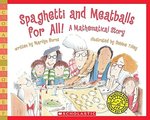
Spaghetti and Meatballs for All!
by Marilyn Burns
Ages: 4-8 years
Spaghetti and Meatballs for All!
Mrs. Comfort has it all figured out — eight tables, four chairs each, room for every one of the thirty-two relatives coming to the family reunion. Then the guests start arriving, and everyone has an opinion about how the tables should be arranged. Marilyn Burns turns a chaotic dinner party into a clear lesson in area and perimeter, showing how the same tables can hold wildly different numbers of people depending on how you push them together. The note at the back offers simple ways to keep the conversation going after the last page.
Why we like it: It does what the best math stories do — hides the math inside something a child already cares about. Area and perimeter are notoriously slippery on a worksheet. Here, they land, because your child can feel why Mrs. Comfort was right all along. A quiet case study in how spatial reasoning shows up at the dinner table, not just in a textbook.
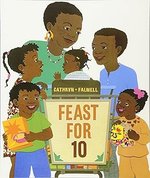
Feast for 10
by Cathryn Falwell
Ages: 4-7 years
Feast for 10 is a counting board book that turns a family grocery run and dinner prep into early math practice. The rhythmic text walks through counting forward and backward, number recognition, and the beginnings of addition and subtraction — all wrapped inside a warm story about a Black family shopping, cooking, and sharing a meal. The math is everywhere once you start looking: comparing quantities, noticing what changes when something is added or taken away, connecting numbers to real moments like setting the table. To bring it further to life, try counting with real or pretend food, acting out scenes, and asking questions like "How many now?" or "What if we add one more?"
Why we like it: Early math sticks when it's tied to something real, and Feast for 10 does exactly that — turning counting into a story your child will ask for again and again.
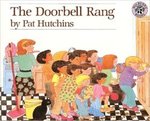
The Doorbell Rang
by Pat Hutchins
Ages: 2-8 years
Pat Hutchins' The Doorbell Rang turns a plate of cookies into a quiet lesson in division — without ever calling it that. Ma bakes a dozen cookies for her two children to share. Then the doorbell rings. And rings. And rings. Each new arrival means the cookies have to be split again, and the math gets more interesting every time. Kids start predicting, counting, and comparing on their own — working out equal groups and bumping up against early ideas of remainders. It rewards real objects on the table: crackers, grapes, pretend cookies, anything countable. Ask how many now? and what if one more friend came?
Awards: Notable Book for Children, American Library Association
Why we like it: A lovely reminder that math lives inside everyday moments — sharing a snack, setting the table, welcoming guests — which is exactly the kind of foundation STEM is built on.
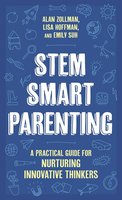
STEM SMART Parenting: A Practical Guide for Nurturing Innovative Thinkers
by Allan Zollman, Lisa Hoffman and Emily K. Suh
Ages: Adult
Three educators — and parents — did the research so you don't have to. STEM SMART Parenting unpacks what the science actually says about how kids develop the skills that matter most: critical thinking, productive struggle, creative problem-solving, and the willingness to take intellectual risks. It moves past the marketing noise of the toy aisle and gives parents a practical, research-backed framework for evaluating what's worth your child's time — and what isn't. Each chapter builds on the last with real examples and no-cost ideas families can use anywhere.
Why we like it: Most parenting books tell you STEM is important. This one shows you how to build the foundation — the curiosity, the resilience, the risk-taking mindset — that makes all the programs and toys actually work. It also gives you a smart, honest way to evaluate the products that promise the world. That's rare, and genuinely useful.
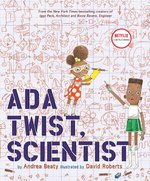
Ada Twist, Scientist
by Andrea Beaty
Ages: 3-7 years
Ada Twist has questions about everything — clocks, roses, the smell of her dad's hair. When a mysterious odor drifts through the neighborhood one spring morning, she does what scientists do: forms a hypothesis, runs experiments, and keeps going even when things go sideways (including an ill-advised attempt to wash the cat). Told in rhyming verse, this book captures what scientific thinking looks like in a curious kid — messy, persistent, and unstoppable. The third in the Questioneers series, and the one that most directly puts the scientific method on the page.
Awards: New York Times #1 Best Seller | Wall Street Journal Best Seller | USA Today Best Seller | Emmy Award–winning Netflix adaptation
Why we like it: Ada doesn't just love science — she practices it. This book shows kids what it looks like to observe, hypothesize, test, and try again. It's one of the best picture books we know for making the scientific method feel like a natural way to move through the world.