STEM at home
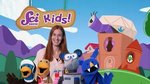
Sci Show Kids
Ages: 6-8 years
SciShow Kids follows host Jessi, her robot rat Squeaks, and their friends at the Fort as they tackle the kinds of questions kids actually ask — and adults often can't answer on the spot. Why do we hiccup? How do volcanoes work? What's inside a black hole? Every episode is short, lively, and genuinely satisfying.
Why we like it: It meets kids at their actual curiosity, not a curriculum's version of it.
It's Not Magic It's Science
by Jay Flores
Ages: 5+ years
Your kid has seen a magic trick and lost their mind over it. Jay Flores figured out how to bottle that exact feeling — and turn it into a science lesson.
It's Not Magic, It's Science is a video series built around a simple but brilliant idea: use the wonder of magic to open the door to real scientific thinking. Every experiment follows three steps — Experiment, Explanation, Exploration — so kids don't just see something cool happen. They understand why, then go further.
Why we like it: The structure teaches kids to ask the next question — which is the whole point of science.
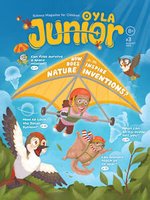
Oyla Jr Magazine
Ages: 8-11 years
OYLA Junior covers nature, space, inventions, logic puzzles, and basic physics — all in a colorful, visual-first format with hands-on activities designed to meet kids where they are. It's not a watered-down version of anything. It's its own thing, with the same curiosity-first DNA.
Like its older sibling, it's ad-free and delivered monthly in print. Screen-free by design, which is a quiet but meaningful feature.
Why we like it: It takes younger kids seriously. The format is accessible; the content never dumbs down.
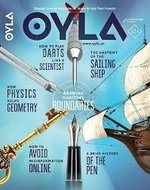
Oyla Magazine
Ages: 12+ years
The name means "think!" — and that's exactly what this magazine asks of its readers. OYLA is a monthly print science magazine that doesn't talk down to kids. Each issue covers everything from the laws of physics to the mysteries of the cosmos, written at a level that actually challenges a curious 12-year-old — and keeps parents reading over their shoulder. It's the kind of thing you leave on the coffee table and find your kid has already picked up on their own.
Why we like it: Print still matters. Something about holding a science magazine makes a child feel like a real reader — and this one earns that.
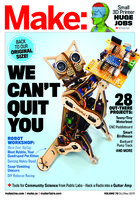
Make: Magazine
Ages: 10+ years
If your child has ever taken something apart just to see how it works, this one's for them.
Make: magazine is a quarterly publication built for kids and adults who would rather build something than watch someone else do it. Electronics, robotics, 3D printing, woodworking, digital fabrication — each issue is packed with projects, tutorials, and stories that treat making things as its own kind of intelligence.
Why we like it: It validates a whole type of learner who doesn't always feel seen in a traditional classroom.
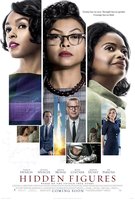
Hidden Figures
by 20th Century Fox
Ages: 8+ years
Hidden Figures tells the true story of Katherine Johnson, Dorothy Vaughan, and Mary Jackson — three Black women whose mathematical brilliance helped launch John Glenn into orbit and quietly changed the course of the Space Race. It's a story about what happens when talent refuses to be ignored.
Why we like it: It puts faces on STEM history that kids rarely see — and opens up real conversation about who gets credit and why.
Dream Big: Engineering Our World
by MacGillivray Freeman Films
Ages: 7+ years
Dream Big is an IMAX documentary that takes the question "how did they build that?" and turns it into something genuinely cinematic — from the Great Wall of China to underwater robots to cities designed to sustain themselves. Narrated by Jeff Bridges, it's the kind of film that makes your child look at the built world differently on the drive home.
Why we like it: Engineering becomes wonder. That shift — from "that's impressive" to "I want to understand how" — is exactly what we're after.
The Magic School Bus
Ages: 4-8 years
Ms. Frizzle and her impossibly game class have been taking field trips inside the human body, through the solar system, and to the ocean floor since 1994 — and the science still holds up. The Magic School Bus makes complex concepts feel like pure adventure, which is exactly how it should feel at this age.
Why we like it: It's a classic for a reason. The curiosity it sparks is the real curriculum.
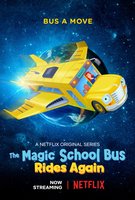
The Magic School Bus Rides Again
Ages: 6-10 years
The bus is back — and it got an upgrade. Ms. Frizzle's younger sister takes the wheel in this Netflix reboot, and while the spirit is the same (big questions, wilder field trips, science that actually sticks), the adventures now span time periods and locations the original never touched.
Why we like it: It introduces the next generation to the bus without just replaying the original. New kids, same magic.
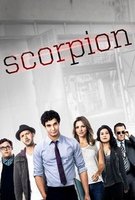
Scorpion
Ages: 10+ years
What if the kid who never quite fit in turns out to be exactly who you need to solve an impossible problem? Scorpion is loosely based on the real story of Walter O'Brien, one of the world's highest-recorded IQs, who assembles a team of brilliant outliers — a behaviorist, a mechanical prodigy, a statistics genius — to tackle the threats no one else can. It's a rare show that treats being different as a superpower rather than a punchline.
Why we love it: Your kid sees themselves in these characters — the ones who think differently, ask too many questions, and don't always get the social stuff. And they watch them save the day, every episode.